Website Development for Small Business: Myths vs Reality

Most small business owners do not need a fancy website. They need a site that helps people find them, trust them, and get in touch without friction. That is where website development for small business and the search for the best digital marketing agency near me usually meet.
Myths make this decision harder than it should be. Reality is simpler: the right site is built around your goals, your customers, and the way people actually buy from a local business.
Do small businesses really need a custom website?
Yes, but not every business needs a giant custom build. A small business website should match how customers book, call, ask questions, or buy. A clinic needs clear service pages and easy appointment requests. A restaurant needs menus, hours, map links, and maybe online ordering. A law firm needs trust signals and plain-language explanations of services.
The myth is that any website will do as long as it looks polished. The reality is that design only helps if the site supports a real business task.
- Clarity: visitors should know what you do in seconds.
- Speed: pages should load quickly on a phone.
- Action: contact buttons, booking forms, and calls to action should be obvious.
- Trust: reviews, photos, service details, and location cues should feel genuine.
That is the kind of thinking BOOST uses when planning sites for local businesses in Vancouver and beyond.
Is the best digital marketing agency near me only the one with the prettiest portfolio?
No. A pretty portfolio is nice, but it is not the whole story. The best digital marketing agency near me is the one that can explain how the site will help your business get enquiries, bookings, or sales. Good visuals matter. So does the logic behind them.
Myth says “great design” means trendy animations and a clever homepage headline. Reality says a great agency asks more useful questions first: Who is the customer? What do they search for? What do they need to trust you? What should happen after they land on the site?
“Will this website help someone choose us faster?” is a better question than “Does this website look impressive?”
If an agency cannot answer that clearly, keep looking.
What should a small business website actually include?
A strong small business website usually has a few core pieces, not a pile of extras. The useful parts are often the least glamorous ones. They answer questions, reduce hesitation, and make contact easy.
- Homepage: a short, clear explanation of who you help and what you do.
- Service pages: separate pages for each major offering, written in plain English.
- About page: enough human detail to build trust without turning into a memoir.
- Contact page: phone number, email, map, hours, and form.
- Mobile-friendly layout: because many local searches happen on phones.
For some businesses, that is enough to start. A local shop may also need product highlights. A contractor may need before-and-after photos. A clinic may need intake forms and FAQ pages. The point is not to add more. The point is to add what helps people decide.
Do you need SEO built into the website from day one?
Yes. Search engine optimisation should be part of the build, not an afterthought. If the site is launched without page titles, headings, internal links, local business details, and clean structure, fixing it later usually takes more time and money.
Myth says SEO is a separate service you buy after the site goes live. Reality is messier. Good website development for small business already includes the basics that help search engines understand what the business does.
That includes things like:
- descriptive page titles and meta descriptions
- headings that reflect real search terms
- service and location pages written for humans first
- image alt text that describes the image honestly
- fast, mobile-friendly pages
If you want the technical baseline straight from the source, Google’s own guidance on Search Essentials and the SEO Starter Guide is a good place to start.
Is cheaper website development always the smarter choice?
Not usually. Cheap can work for a very simple brochure site, but “cheap now” often becomes “expensive later” when the site needs fixing, rewriting, or rebuilding. The real cost is not just the build. It is the lost leads from a confusing site.
Myth says small businesses should spend as little as possible and hope the website pays for itself. Reality says the better question is whether the site is built to do a job. If it is supposed to bring in calls, bookings, or quote requests, the work has to be done properly.
A modest website that is clear and conversion-focused is usually a better buy than a flashy site that leaves visitors guessing.
How do you compare agencies without getting lost in sales talk?
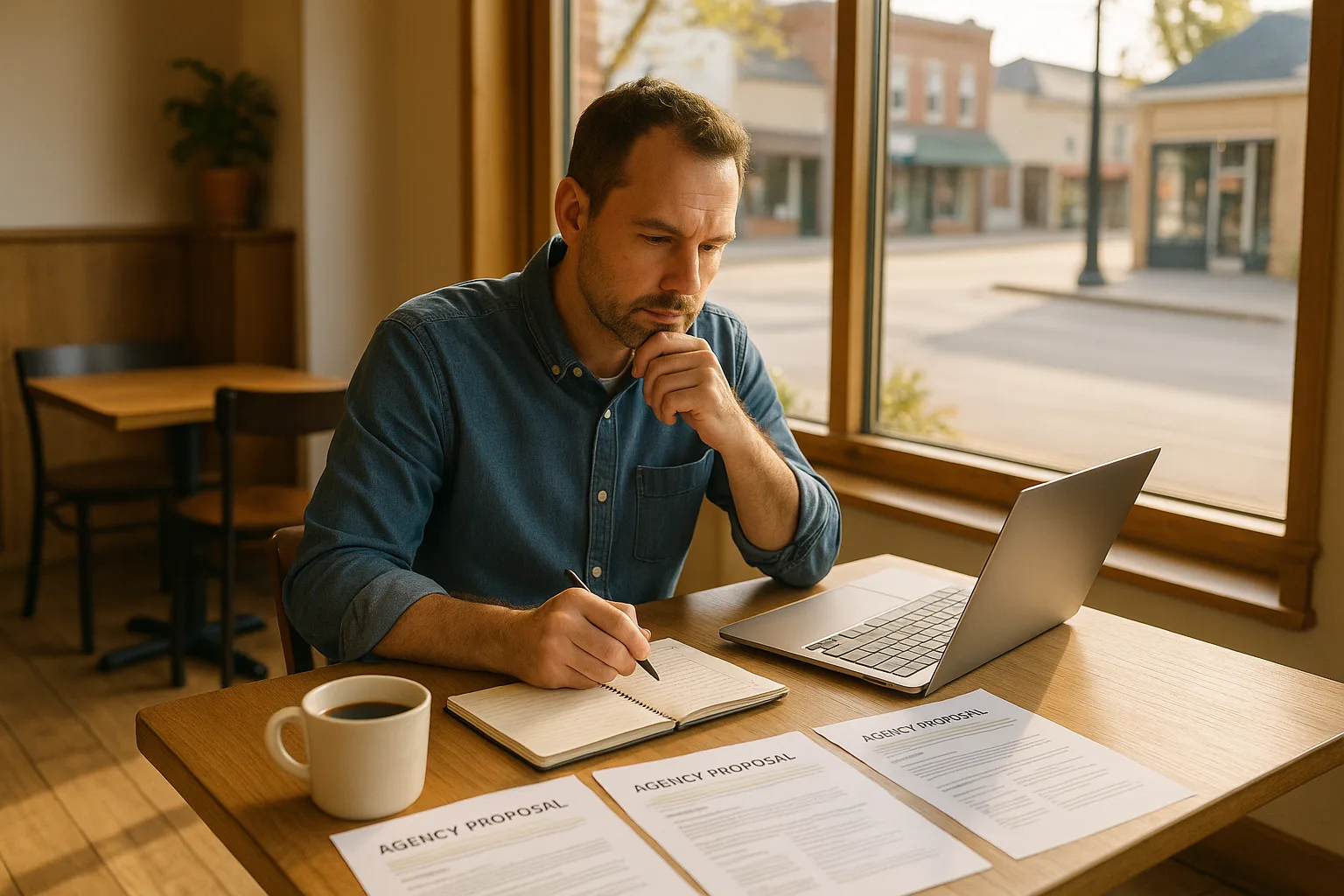
Compare agencies by process, clarity, and fit — not by buzzwords. When you speak with a digital marketing agency, ask how they approach planning, content, SEO, tracking, and post-launch support. Their answers will tell you more than a slick pitch deck ever will.
It can help to compare a few real types of providers:
| Option | Best for | Watch-outs |
|---|---|---|
| Local full-service agency | Businesses that want website development, SEO, ads, and ongoing support in one place | Make sure the scope is clear and the work is not vague |
| Freelancer | Very focused projects with a tight budget | May not cover strategy, ads, or long-term support well |
| Template-based studio | Fast launches and simple needs | Can feel generic if the business needs more than a basic site |
| In-house hire | Businesses with enough volume to justify a full-time role | Costly if you only need part-time help |
For small and medium businesses, the right fit is often a partner that can handle the whole picture: website development, SEO optimisation, social media management, Google and Meta advertising, and even chatbot support when enquiries start coming in after hours.
What does a good agency process look like?
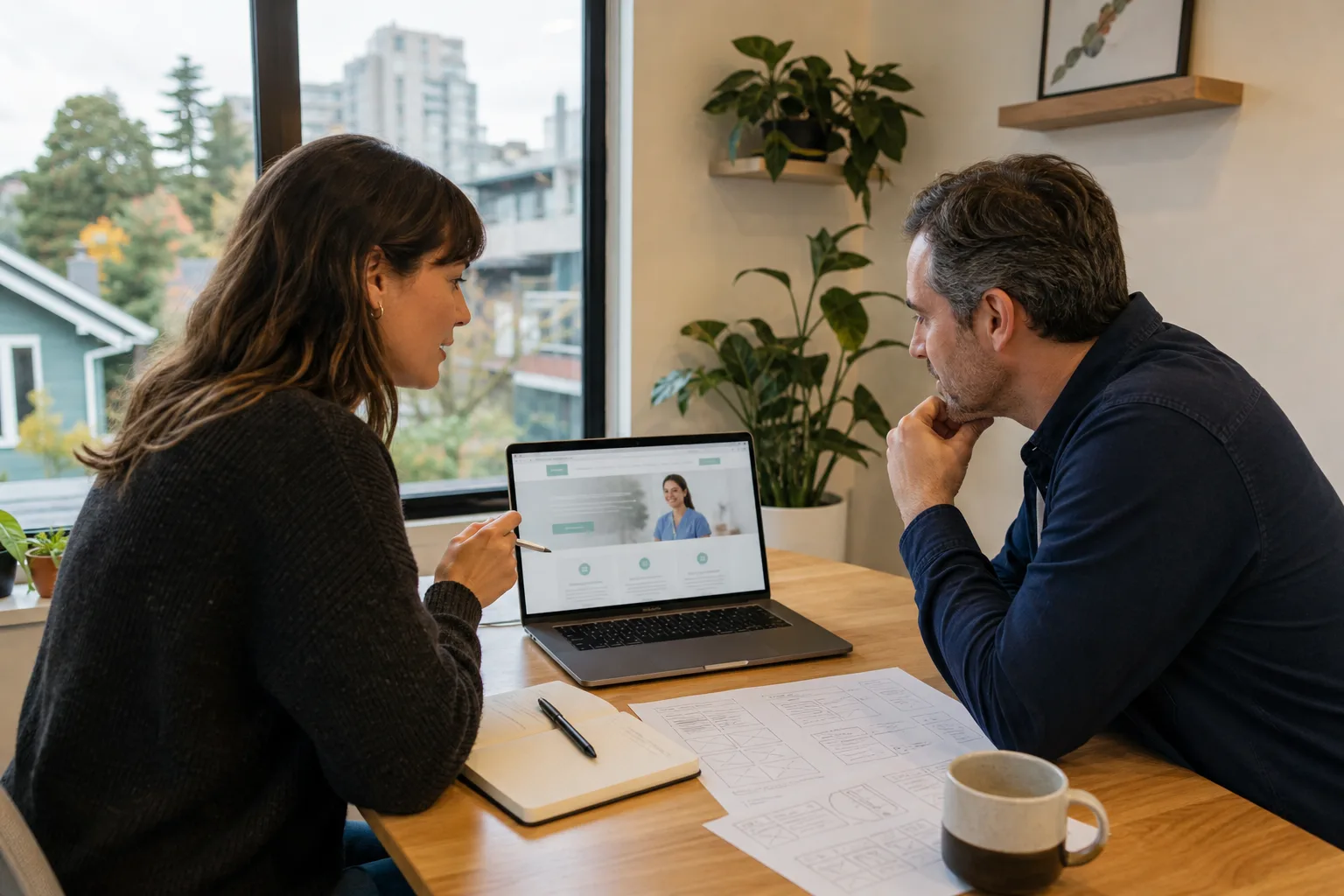
A good process feels calm, not chaotic. The agency should ask about your customers, your services, your local area, and the actions you want people to take. Then it should turn that into a site plan that is easy to review.
Here is what a sensible process often looks like:
- Discovery: we talk about your business, goals, competitors, and current website if you have one.
- Structure: the agency maps the pages and the key messages.
- Content: copy is written or refined so it sounds like your business, not a brochure robot.
- Design and build: the site is created for desktop and mobile.
- Launch and review: analytics, forms, and calls to action are checked.
BOOST takes that practical route because small business owners usually do not want drama. They want a website that works.
Myth: a website alone will bring leads
Reality: a website works best as part of a bigger system. A good site helps, but traffic still has to come from somewhere. That might be local SEO, Google Ads, Meta Ads, social media, email, or people finding you through referrals and then checking your site.
This matters a lot for businesses like dentists, restaurants, electricians, salons, and law firms. A strong site can turn interest into action, but it usually needs support from search and advertising to keep the phone ringing.
Think of the website as the front desk. It should be ready for visitors. But people still have to walk through the door.
How do you know if an agency is a good fit before you sign?
The best fit is usually obvious once you ask the right questions. You should feel understood, not rushed. A good agency will speak plainly, explain trade-offs, and give you a reasoned plan instead of vague promises.
- Can you show how the site will support leads or bookings?
- Who writes the content, and how much input do we have?
- Will the site be built with SEO basics in place?
- What happens after launch if we need changes or support?
- Can you help with ads, social media, or chatbot tools later if needed?
If the answers feel slippery, that is a sign. If the answers are clear, specific, and calm, you may have found the best digital marketing agency near me for your situation.
What small business owners usually get wrong
The biggest mistake is treating the website like a box to check. A website is not a decoration. It is a working part of the business. When owners treat it that way, better decisions follow.
Common missteps include:
- writing too much text with no clear call to action
- using generic stock photos that do not feel local
- burying the phone number or contact form
- launching without thinking about search visibility
- choosing a provider only because the price looks low
None of these are fatal on their own. But together, they make a site feel dull and hard to use. That is a tough combination.
Frequently Asked Questions
How much website development does a small business really need?
A small business usually needs enough website development to make the business easy to understand, trust, and contact. That often means a strong homepage, service pages, an about page, and a contact page. Some businesses also need booking tools, quote forms, menus, or location pages depending on how customers buy or enquire.
Should I hire one agency for website, SEO, and ads?
Often, yes. A single team can keep the messaging, design, SEO, and advertising pointed in the same direction. That matters for local businesses because the website, Google Ads, social media, and search visibility all affect the same customer journey. BOOST is built around that joined-up approach.
What is the difference between a website designer and a digital marketing agency?
A website designer may focus mainly on layout and visuals. A digital marketing agency usually looks at the bigger picture too: search visibility, lead generation, ads, social media, reporting, and what happens after launch. For small businesses, that broader view can be very useful.
How do I choose the best digital marketing agency near me?
Choose the agency that explains things clearly, asks practical questions, and shows how the website will help your business get leads or bookings. Look for real examples, a sensible process, and support beyond launch if you need it. The right partner should feel competent and easy to work with.
Can BOOST help if I already have a website?
Yes. BOOST can review an existing site, improve the content and structure, help with SEO optimisation, add social media or ad support, and build tools like chatbots if your business needs faster replies. Sometimes a focused refresh is enough. Sometimes a rebuild makes more sense.
If your current site is not bringing in enough calls, bookings, or quote requests, it may be time for a proper reset. BOOST helps small businesses build websites, improve search visibility, and connect the site to real marketing that brings people in.