Website Development for Small Business: A Practical Agency Guide
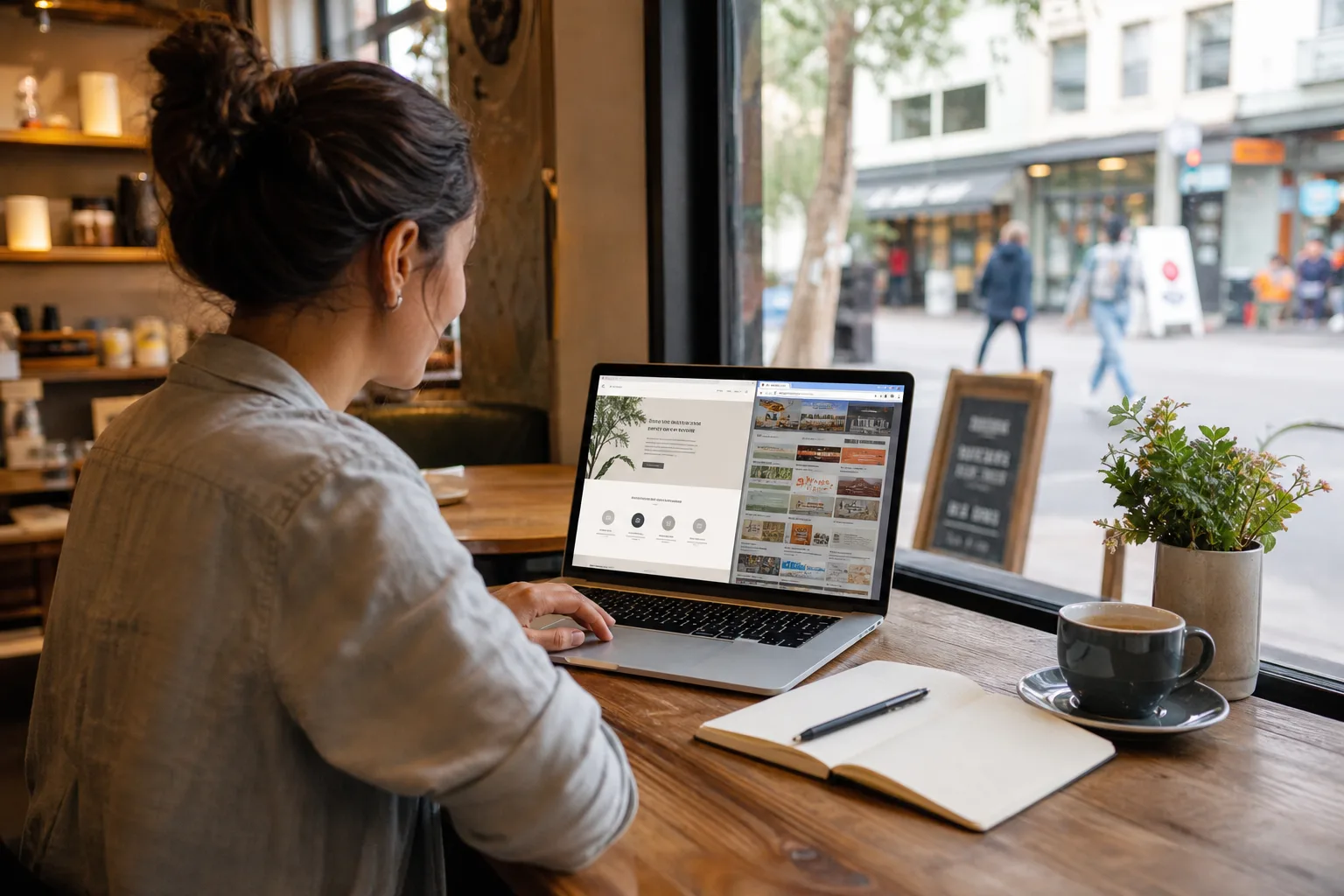
Choosing website development for small business is easier when you know what a good agency site should actually show you. The best digital marketing agency websites don’t just look polished — they make their process, services, and next step obvious in seconds.
This guide walks through the process step by step, so you can compare agencies with a steadier head. You’ll see what to look for, what to ignore, and how a company like BOOST helps local businesses make a sensible choice.
What should a small business website do first?
A small business website should answer three questions fast: what you do, who you help, and how someone can contact you. If a visitor has to hunt for that information, the site is working against you. For a clinic, restaurant, law firm, or local shop, clarity beats clever design every time.
The most useful websites do the basics well. They make the phone number easy to find, explain services in plain language, and give visitors one clear next step, such as calling, booking, or sending a quote request.
- Clinic: appointment booking, services, location, and insurance or intake details.
- Restaurant: menu, hours, reservation link, directions, and takeaway options.
- Law firm: practice areas, lawyer profiles, consultation request, and trust signals.
- Local shop: product range, store hours, map, and contact details.
How do you judge the best digital marketing agency websites?
The best digital marketing agency websites make it easy to understand what the agency does, who it serves, and how the work is handled. They usually feel calm, direct, and useful. You should be able to tell within a minute whether the agency understands small business needs or is built mainly to impress other marketers.
Look for proof of practical thinking, not just design polish. A good agency site explains services in plain English, shows examples of work, and gives a straightforward path to talk to someone.
Start with the homepage
The homepage should give you the essentials without making you scroll for clues. Strong agency websites lead with a clear service message, a short explanation of who they help, and visible ways to contact them.
If a homepage is full of vague phrases and abstract graphics, that’s a warning sign. Small business owners need straight answers, not puzzles.
Then check the service pages
Service pages should be specific. A useful agency site separates website design, SEO, social media management, Google and Meta advertising, chatbot development, and reporting into clear sections, each with its own purpose.
For example, a dentist does not need a generic “growth package” description. The dentist needs to know how the agency handles booking-focused pages, local search, and review-friendly content.
Look for proof, not promises
Case studies, portfolio pieces, screenshots, and process notes matter more than shiny slogans. You want to see how the agency thinks, how it communicates, and how it handles real business goals.
A trustworthy agency website makes its work easy to inspect. If the site hides the process, blurs the offer, or sounds like everyone else, keep moving.
What steps should you follow before hiring an agency?
A smart hiring process is simple: define your goal, review agency websites, compare the details, and ask direct questions. That order saves time and keeps the conversation grounded in your actual business needs.
- Write down your main goal. More calls? More bookings? Better local visibility? Fewer no-shows? Start there.
- Review the agency website like a customer. Ignore the design for a moment and focus on clarity, services, and trust.
- Check whether the agency has worked with small businesses. A local electrician has different needs from an online-only brand.
- Ask how the website will be built. Who writes the copy? Who handles search setup? What happens after launch?
- Ask what support comes next. A website without updates, tracking, or search work can go stale fast.
This is where BOOST’s work often fits naturally. The agency is based in Vancouver, BC, Canada, and helps local businesses with website design, SEO optimization, social media management, Google and Meta advertising, WhatsApp and Telegram chatbots, content strategy, analytics, and custom app development.
Which website details matter most for small business owners?
The most important details are the ones that help a customer act. Good website development for small business means the site is built around real behaviour: someone lands, scans, decides, and takes action. Pretty layout matters, but only after the basics are handled well.
Pay close attention to these pieces:
- Mobile usability: buttons, menus, and forms should work cleanly on a phone.
- Fast loading pages: slow pages lose impatient visitors quickly.
- Local contact details: address, map, hours, and phone number should be easy to find.
- Search-ready structure: pages should be written so Google can understand them.
- Clear calls to action: “Book now,” “Request a quote,” or “Call today” should appear where needed.
If you run a restaurant, the menu should not be buried under five clicks. If you run a law office, the consultation form should not feel like a tax return. If you run a neighbourhood shop, people should be able to see what you sell without squinting.
How do digital marketing agency websites compare?
Different agencies tend to emphasise different strengths. Some focus on beautiful presentation, some on lead generation, and some on broad service bundles. A good comparison looks at how clearly the agency explains results, support, and next steps — not just how modern the site looks.
| Agency type | What it usually highlights | What small businesses should check |
|---|---|---|
| Design-first agency | Visual polish, branding, layout | Whether the site also explains SEO, content, and follow-up support |
| Lead-gen agency | Calls, forms, bookings, ad results | Whether the website is easy to trust and easy to update |
| Full-service agency | Website, SEO, ads, social media, analytics | Whether the services are explained clearly or bundled too loosely |
If you compare BOOST with larger names such as WebFX, Ignite Visibility, or BlueHat Marketing, the main question is not who sounds loudest. It is who explains the work in a way that fits your size, your budget, and your local market.
What questions should you ask before signing anything?
Direct questions save headaches later. A reliable agency should answer them plainly, without hiding behind jargon or vague language.
- Who writes the website copy?
- Will the site be built for mobile first?
- How will local SEO be handled?
- What happens after the website launches?
- Can the site support ads, forms, chatbots, or booking tools later?
- How will reporting be shared?
Ask one more: “What would you do if I were a restaurant, not a software company?” That question cuts through generic sales talk fast.
How should a small business decide between DIY and hiring an agency?
DIY website builders can be fine for very simple needs, especially when time and budget are tight. Hiring an agency makes more sense when the website needs to generate leads, support search visibility, or connect with ads, social media, and customer follow-up tools.
If the website is meant to do real business work, the hidden cost of a weak setup can be bigger than the agency fee. A law firm with unclear pages, for example, may lose trust before a visitor even reads the first paragraph.
BOOST often helps at this stage by turning vague goals into a practical plan: a better website, stronger search visibility, and the right marketing channels tied together instead of bolted on one by one.
What should happen after the website launches?
Launch is not the finish line. A useful site needs ongoing attention, because customer behaviour changes, search results shift, and promotions come and go. Even a simple local business website should be checked regularly for forms, tracking, page speed, and content that no longer reflects the business.
After launch, look for three things: search tracking, conversion tracking, and basic content updates. If ads or social campaigns are part of the plan, the website should be ready to support them without extra scrambling.
Frequently Asked Questions
How much should a small business website focus on design versus function?
Function should come first. A good-looking site that does not bring in calls, bookings, or quote requests is not doing its job. Design still matters, but it should support clarity, trust, and easy action. For most small businesses, the best websites are simple to use and easy to understand.
What makes a digital marketing agency website trustworthy?
Trustworthy agency websites explain services clearly, show real examples, and make contact easy. They avoid vague claims and show how the agency actually works. If the site feels honest, organized, and specific, that is usually a good sign. If it feels slippery, it may be hiding a weak process.
Should a small business website be built with future marketing in mind?
Yes. A website should be ready for search engine optimization, online ads, social media traffic, and follow-up tools like chatbots or forms. That does not mean adding everything on day one. It means building the site so new marketing channels can be added without starting over.
What is the smartest first step if my current website is not helping?
Start by listing what the website should do better: more calls, more bookings, better local visibility, or stronger trust. Then review the site on a phone and write down where it confuses people. From there, a focused update plan is much easier to build with an agency like BOOST.